About Tuva
A republic in the geographical center of Asia
About Tuva
A republic in the geographical center of Asia
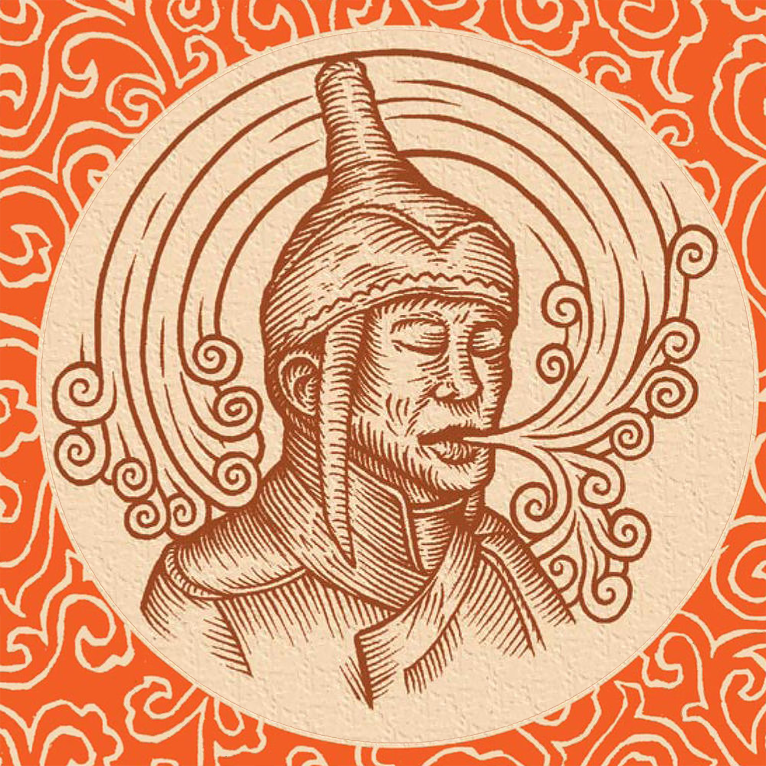
Khoomei
The first written sources describing the art of throat singing date back to the mid-19th century. Naturally, such a unique art form caused at least surprise among Europeans, who were accustomed to completely different musical traditions. For example, the ethnographer E.K. Yakovlev described the throat singing he heard in Tuva. "The unique impression created by 'singing without words' cannot be conveyed in words. This singing is called "kumailer" (i.e., "hoomeyleer") and consists of "a whole range of wheezing sounds." The singer inhales as much air as their lungs can hold, and then begins to "extract strange, rumbling sounds from the depths of their insides," the continuity and duration of which depend entirely on their ability to control their diaphragm.
This is followed by a new deep breath and the continuation of the "mysterious sounds, accompanied by an accompaniment on the two-stringed topsulurm," an instrument consisting of a long neck and a body with a hollow, bladder-covered shell, which is far away, until the singer abruptly stops, completely unexpectedly for the listener, without any tonal or rhythmic end, so that the entire sequence of "mysterious sounds" cannot be described as a melody.
According to most experts, Tuvan throat singing, or khoomei, is significantly different from the similar art of the Altai, Buryat, and Mongolian peoples, primarily due to its wide variety of styles. The main styles include kargyraa, khoomei, sygyt, ezengileer, and borbannadyr, and there are also several variations such as dumchuktar (novelization), khorokteer (breast singing), and khovu kargyraazy (steppe kargyraa).
Legends and stories have been preserved about the origin of different types of Tuvan throat singing. For example, one legend says that in ancient times, the kargyraa style was popular among camel herders. Kargyraa originated as an imitation of the voice of a camel mother: when a camel baby dies, the mother camel jumps around, making sounds similar to kargyraa. The term kargyraa itself has a sound-like basis, referring to wheezing or sounds similar to wheezing. For example, in the modern Tuvan language, there is an onomatopoeic verb kargyraar (kargyra), which means:
1) to wheeze, to make wheezing sounds;
2) to boil (when boiling, for example, porridge).
Let's also compare "kark" - imitation of the sound made by a crow. The origin of the term "hoomei" is interpreted in different ways. Some associate it with the name of the art of sound imitation, a special manner of sound extraction "hooleer", which means to hum or produce a sound similar to a hum, others - with the Tuvan name of the throat, larynx ho, hoozu.
In the Mongolian language, there is also a word "hoomiy", which means throat, nasopharynx, throat singing. It is quite possible that the term was borrowed by the Mongols from the Tuvans.
The hoomei style is acoustically associated with a heavy, low, buzzing sound of extremely low frequencies. Usually, the sound itself in the hoomei style is considered more important than the poetic text. Unlike the Mongolian singing, the Tuvinian hoomei can be performed without text, or with the text of a lullaby genre. This is a significant aspect of ancient Tuvinian music.
According to a Tuvan legend, an orphaned young man lived alone for three years at the foot of a cliff that echoed in the surrounding valley. The movement of air currents under high pressure created a resonant effect between the rocks. Nature itself seemed to encourage people's creativity in their search for self-expression when they were left alone with the turbulent elements. One day, the young man sat and made sounds that mimicked the buzzing sounds coming from the cliff. The wind carried the sound to the people, and they called it "hoomei."
Tuvans, who live in isolated compact groups in northwestern Mongolia, also sing in the Khoomei style.
The Tuvan style of sygyt most likely originated from the verb sygyr — to whistle. There is a noun sygyt (whistle).
The term sygyt means lamentation, crying as a derivative of this word sygytchy — wailing or moaning. This suggests a direct connection between the Tuvan sygyt style and the funeral rite, but this idea needs scientific evidence.
The name of the Ezenghileer style comes from the word "ezengi," which means "stirrup," and it is perhaps the most accurate way to describe the main meaning and character of its music. When riding a horse, the silver bridle and saddle blanket, which were attached to the saddle, would make a specific rhythmic sound when they came into contact with the stirrups. To produce these sounds, the rider had to take a specific position in the saddle and ride at a canter. The Ezenghileer style emerged as an imitation of these sounds.
The name of the borbannadyr style comes from the Tuvan verb "borbannat" - to roll something round. This style has rhythmic forms.
There are several theories about the origin of throat singing as an art form. One of the most widely accepted theories is that the origin of solo two-voice singing can be traced back to its connection with the Lamaist religion. According to this theory, the people initially developed this form of singing in Lamaist monasteries, but over time, it evolved into a distinct form of vocal art. This opinion cannot be accepted, as Lamaism entered Tuva in the 17th century and was established as the official religion of the Tuvans in the second half of the 18th century, that is, much later than the emergence of throat singing. With this approach, this art is simplified. This phenomenon is not the remnants of the former religious songs, which allegedly turned into a ritual genre. A much more reasonable approach to this genre is to view it as a vocal art that originated in the form of lyrical, love-themed songs that were not originally associated with shamanic incantations or funeral rituals.
Unlike the melodic solo duet of the Tuvans, the singing of the Tuvans, Mongolians, or Tibetans can be described as a collective harmonious polyphony performed with a guttural sound.
Guttural singing is the result of a specific guttural singing style and the musical-poetic thinking of the people. For the Tuvans, for example, it is driven by their boundless love for nature. Therefore, nature was the measure of all things and the source of inspiration for the ancient master singers. The value and beauty of sound were measured by the ability to convey "living life" not only through imitation, but also by penetrating its essence.
The aesthetic perception of traditional onomatopoeia by the Tuvans, such as hunting and shamanic onomatopoeia, is evident in the special, entertaining nature of everyday, vocal, and instrumental imitations of domestic animals, forest animals, and the surrounding nature, which have neither a productive nor a magical function.
Based on traditional sound imitations of an entertaining nature, in which the Tuvans' heightened sensitivity to the sounds of animals and birds, the calls of cranes, orphan geese, the roar of bulls, and the imitation of the singing of yellow-breasted titmice, the two-voice throat singing that is common in Tuva has developed, where two distinct musical voices can be heard in the same performance.
Since ancient times, throat singing has been one of the traditional forms of Tuvan musical art and has been an integral part of festivals, rituals of everyday life, and has been vividly reflected in the heroic tales and fairy tales of the Tuvan people, carefully preserved and passed down from generation to generation over the centuries. So, in the legend "Old Man Boraldai, who has a horse named Boka Shokar" is mentioned: "When Boraldai looked inside the yurt, he saw a golden princess... Six girls were weaving silver and gold threads into their braids, three girls were tying on beads and jewelry, and six boys were performing kargyraa, khoomei, and sygyt."
While some researchers attribute the origins of the Tuvan heroic epic to the early stages of feudal relations in Tuva, which occurred in the 6th to 8th centuries, the exact time of the emergence and development of throat singing is uncertain. Undoubtedly, the traditions of this genre were established much earlier.
Republic of Tuva
Tuva, official name — Republic of Tuva (Tuva Republic) — a constituent entity of the Russian Federation, a republic within its borders. It is part of the Siberian Federal District. It is part of the East Siberian Economic Region. The capital is the city of Kyzyl. In the west, the Republic of Tuva borders the Altai Republic and the Khakassia Republic, in the north, it borders the Krasnoyarsk Territory, in the northeast, it borders the Irkutsk Region and the Buryatia Republic of Russia, and in the south, it borders Mongolia. It was incorporated into the Russian Soviet Federative Socialist Republic on October 14, 1944, as the Tuva Autonomous Region (later renamed the Tuva Autonomous Soviet Socialist Republic), and it was transformed into a republic on May 24, 1991. The official languages are Tuvan and Russian. The Todginsky ethnolect is widespread in the Todginsky region.
The official website of the Republic of Tyva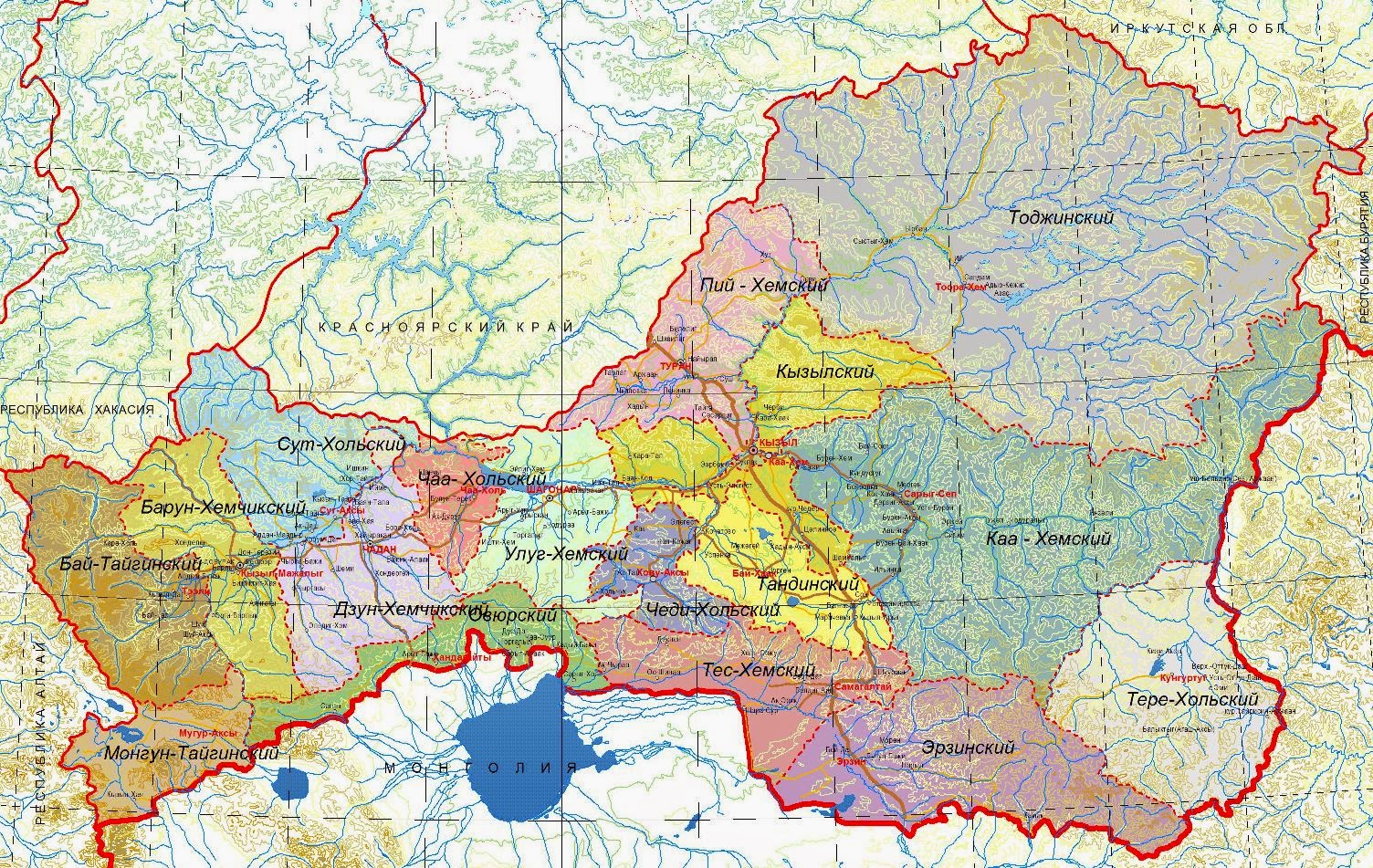
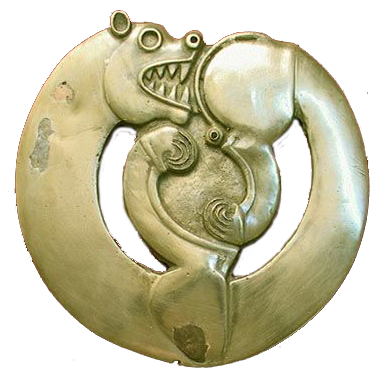
The history of Tuva
40,000 to 30,000 years ago, during the Paleolithic period (the earliest period of the Stone Age), humans began to inhabit the territory of Tuva. 20,000 to 15,000 years ago, during the Late or Upper Paleolithic period, primitive humans intensively settled in Tuva. Their primary activities were hunting and gathering.
More detail +Подробнее +

The culture and buddhism in Tuva
The traditional culture of the Tuvans, the main population of the republic, is a nomadic culture...
More detail +Подробнее +
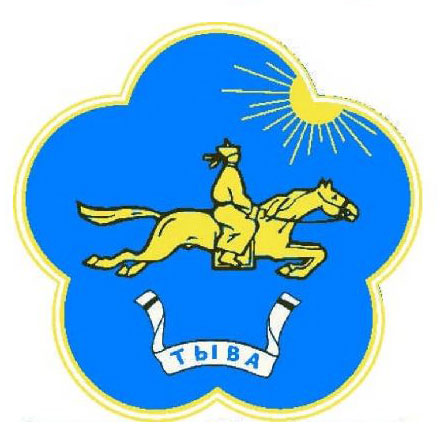
Coat of arms and anthem of the Republic
The modern state symbols, the coat of arms and flag of the Republic of Tuva, were adopted by the Supreme Council of the Republic on September 17, 1992
Подробнее +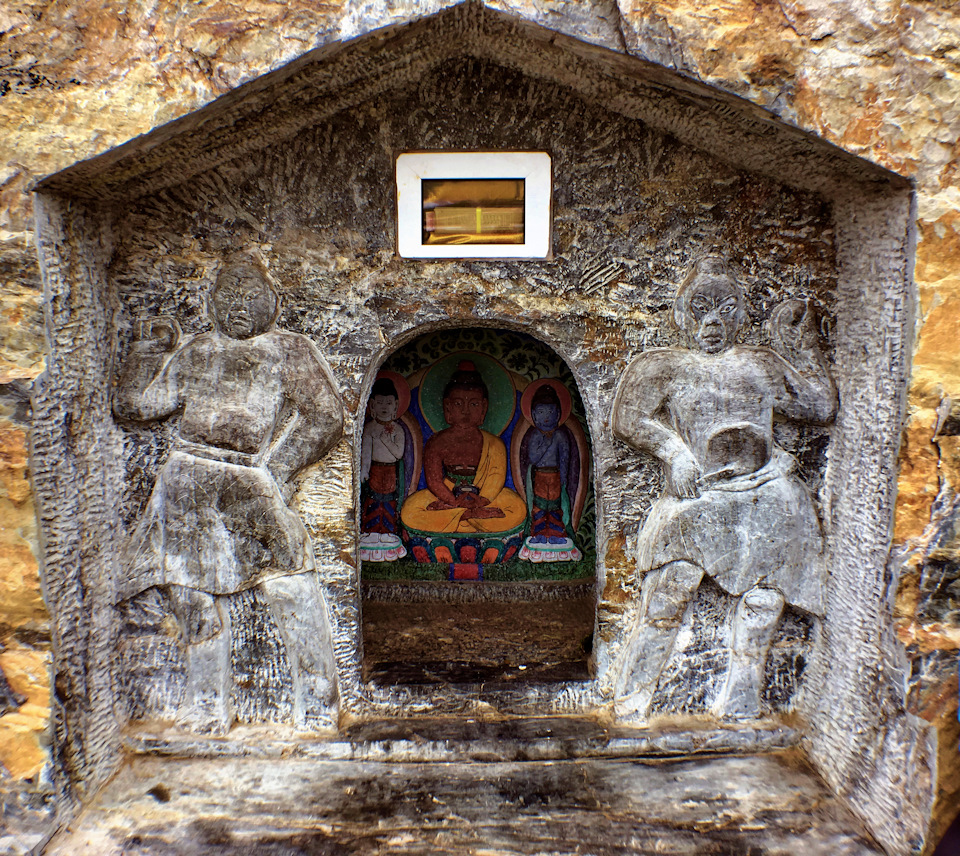
Sume – a buddhistic relic
The Sume Buddhist niche (Tuva: Sume) is located on the left bank of the Cha-Khol River (Russia, Tyva), near the village of Urbun, at a height of four meters from the foot of Mount Sume. The niche is accessed by steps carved into the gray shale.
More detail +Подробнее +
 Khoomei — Khoomei is one of the five main techniques of Tuvan throat singing, an
important part of Tuvan culture, worldview, and national identity..
Khoomei — Khoomei is one of the five main techniques of Tuvan throat singing, an
important part of Tuvan culture, worldview, and national identity..
Tuvan throat singing has gained worldwide fame and has become an unofficial symbol of the republic.
The main throat signing styles are HOOMEY, SYGYT, KARGYRAAThroat singing is a unique form of art that is characteristic of only certain peoples in the Sayano-Altai region, such as the Tuvinians, Altaians, Mongolians, and Bashkirs who live in the European part of Russia. The uniqueness of this art lies in the fact that the performer produces two notes simultaneously, creating a unique two-note solo.
More detail +


The richness and diversity of Tyva's flora
Flora of Tuva
The flora of Tuva is not just an endless taiga, but a complex mosaic of different altitude zones, each with its own unique character and species composition. The region's flora is incredibly rich, with over 2,070 species of vascular plants.
More detail +
Подробнее +

Red Book of the Republic of Tuva
According to the results of scientific research conducted in Tuva in recent years, the list of rare species has been supplemented with 34 species, some of which are rare and narrowly endemic....
Download


The Kingdom of Wildlife: From the Snow Leopard to the Gazelle
Fauna of Tuva
The fauna of Tuva is as diverse as its landscapes. According to the latest data, the republic is home to 86 species of mammals, about 364 species of birds, 9 species of reptiles, and up to 40 species and subspecies of fish.
Подробнее +
Interesting facts about Tuva
Description of traditional rituals, historical facts, articles, travel blogs and other materials describing the everyday life and traditional culture of the people of Tuva
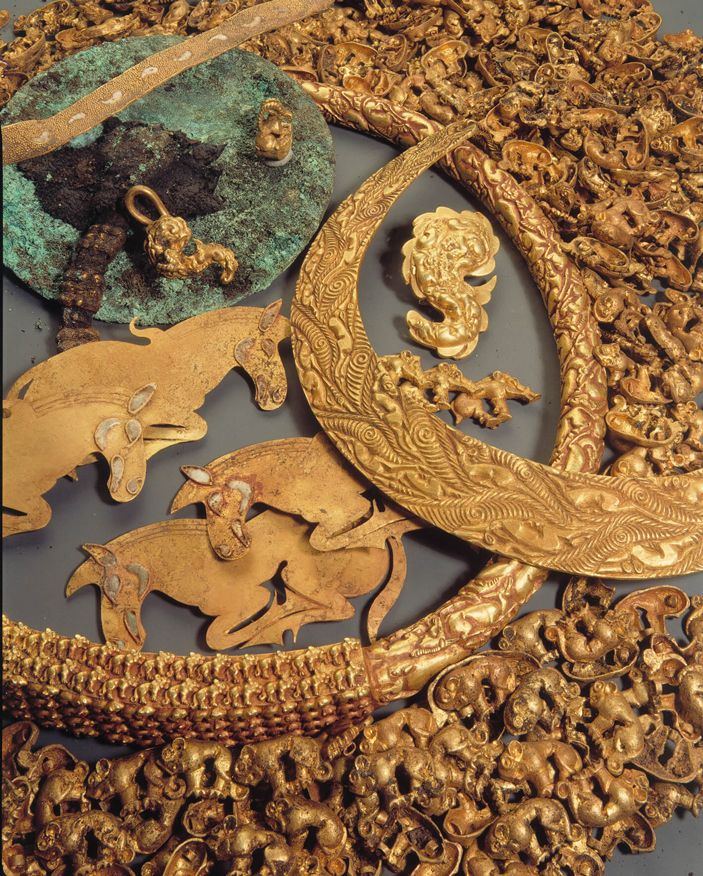
Valley of the Scythian Kings
The territory of the Valley of the Kings of Tuva is located in the Turano-Uyuk mountain-steppe basin in the Piy-Khem district of the Tuva Republic of the Russian Federation.
More detail +Подробнее +
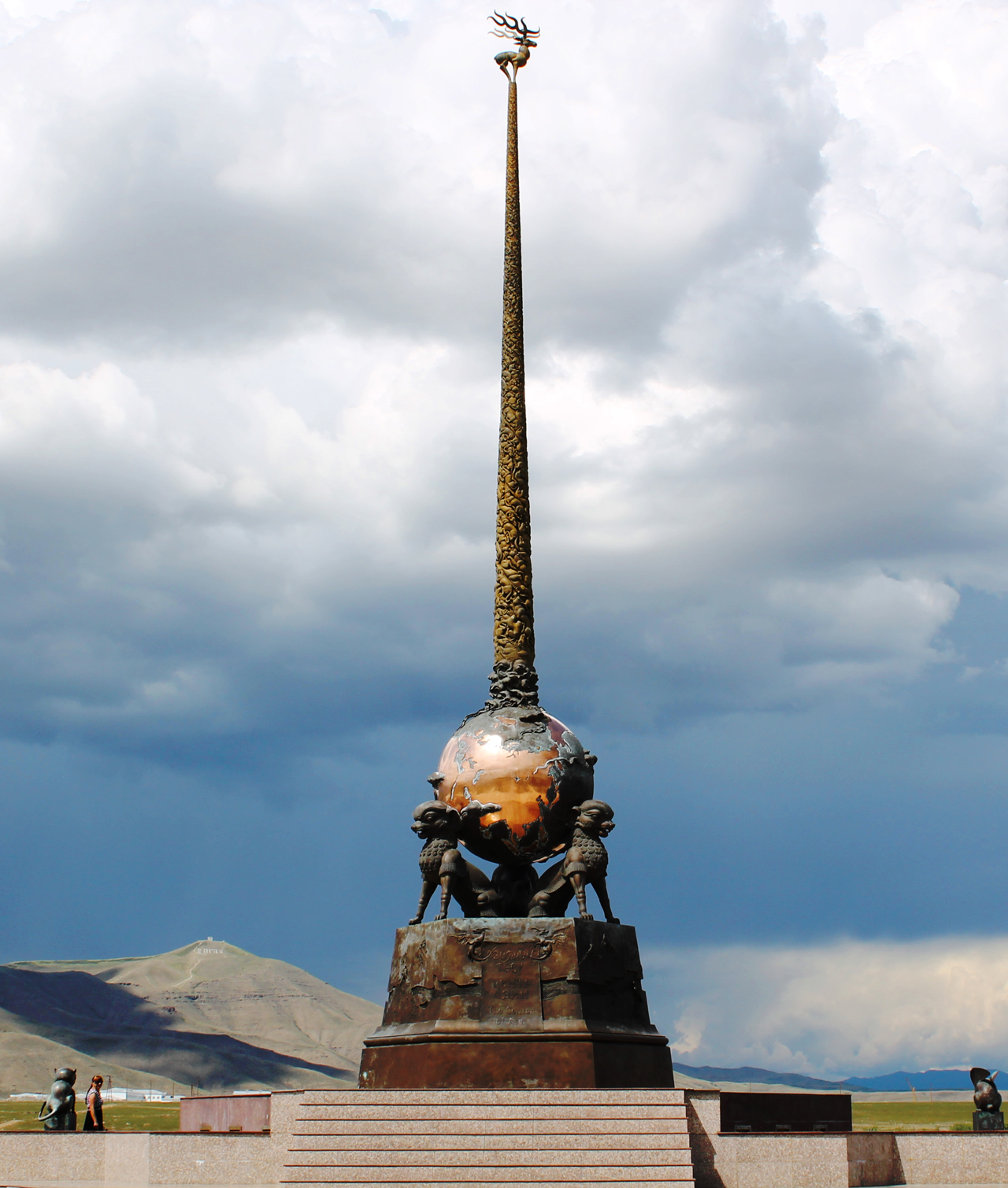
Tuva - the center of Asia
The Republic of Tuva is located in the geographical center of Asia, on this place in the city of Kyzyl is installed a commemorative obelisk.
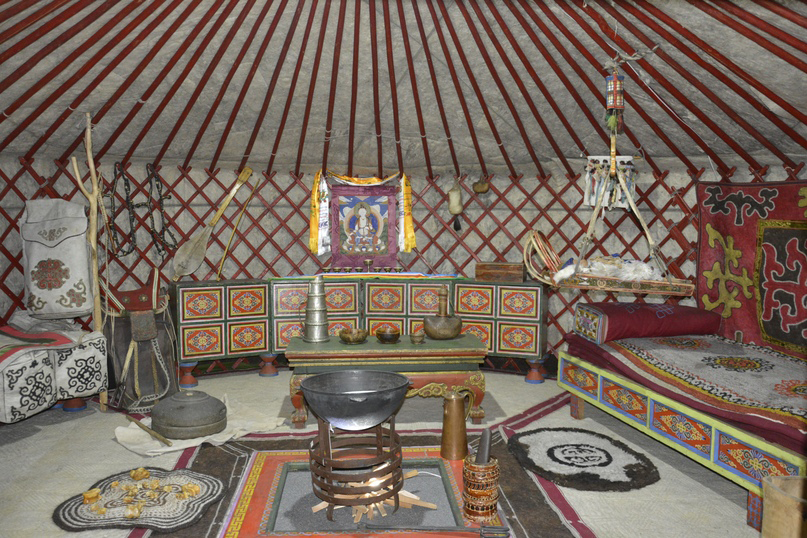
Tuvan yurt – a copy of the surrounding world
Yurt - a traditional dwelling of the Tuvan nomads in which all the elements of nature are expressed: the smoke hole (khaaraacha) is the sun, the sticks (yna) – the sun rays, the lattice walls (khana) – the mountains and ridges.
More detail +Подробнее + | Подробнее +
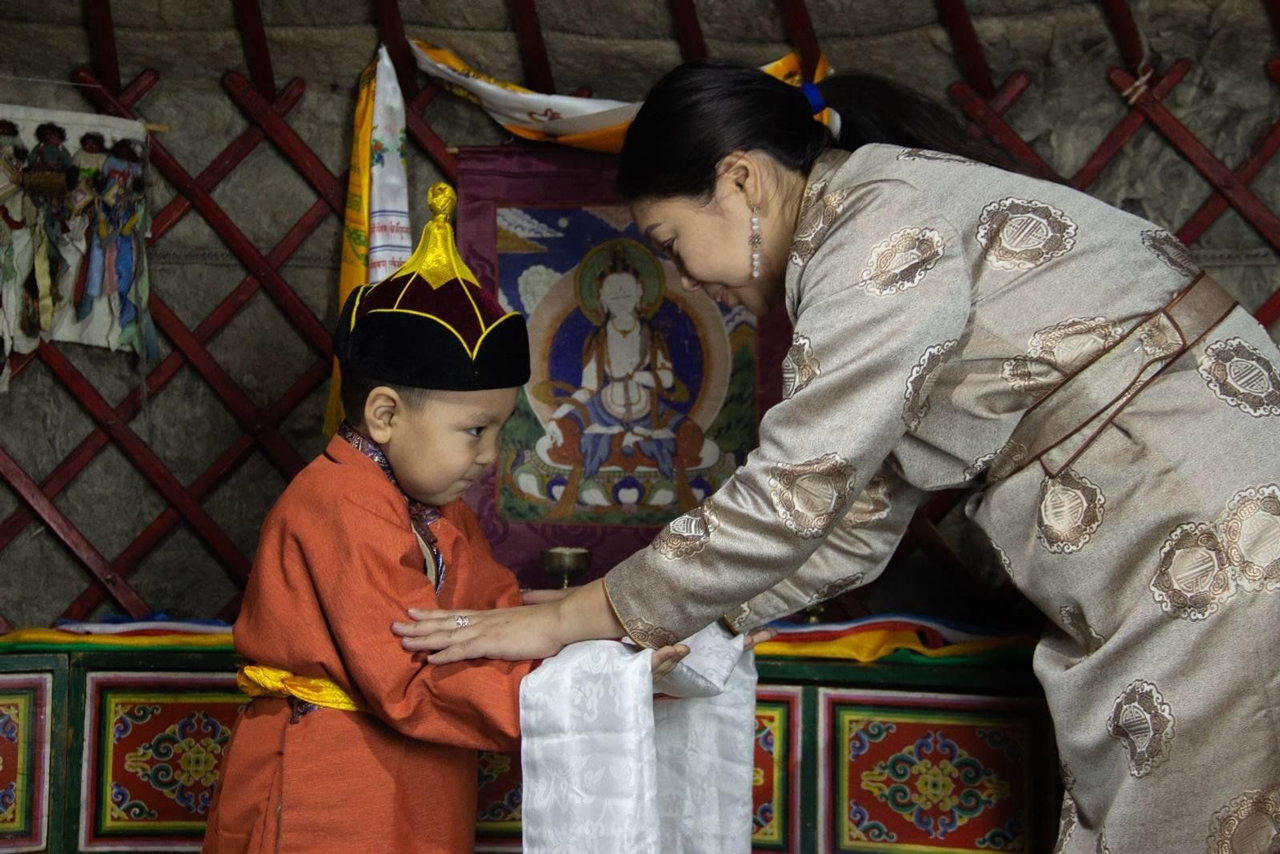
"Peace and prosperity to you!"
A special form of greeting was used — cholukshuuru. Gestures were an important element of this greeting: the younger person, whether a guest or the host, would extend their hands with their palms facing up as a sign of greeting, while the older person would lower their hands with their palms facing down, and their hands would touch at the level of their elbows.
Подробнее +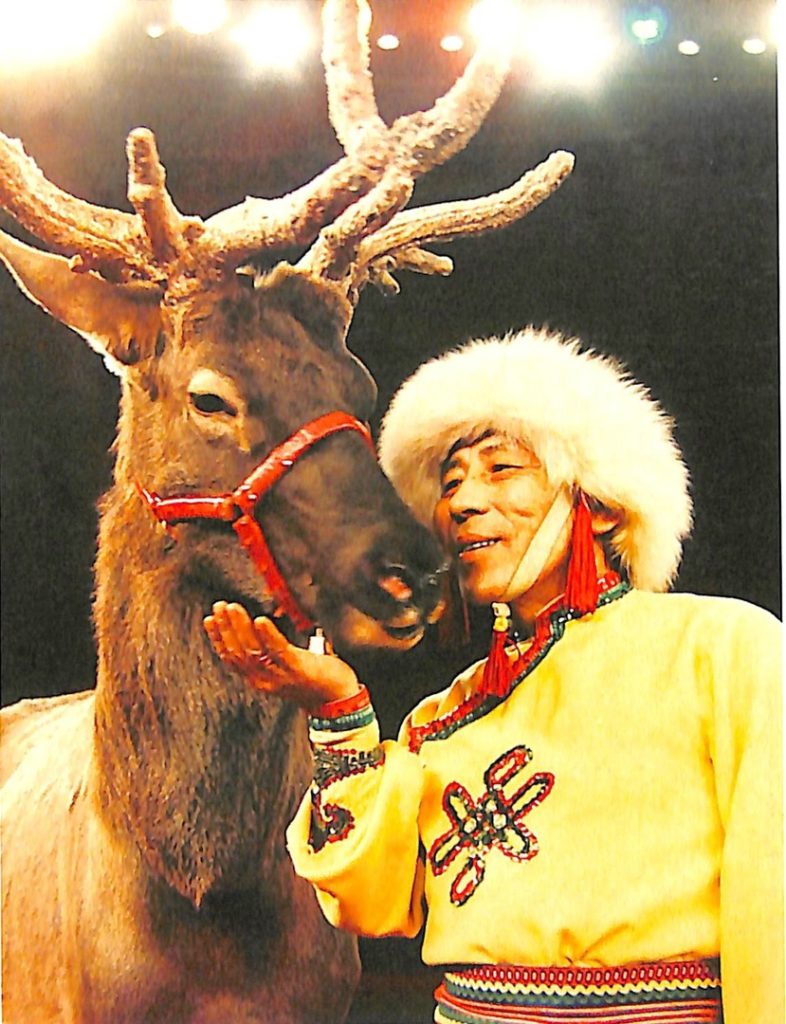
Tuva Circus
On July 25, 1939, by the decision of the Government of the Tuvan National Republic, the first circus group was created under the leadership of the People's Artist of the USSR Vladimir Bazyr-oolovich Oskal-ool.
| Подробнее +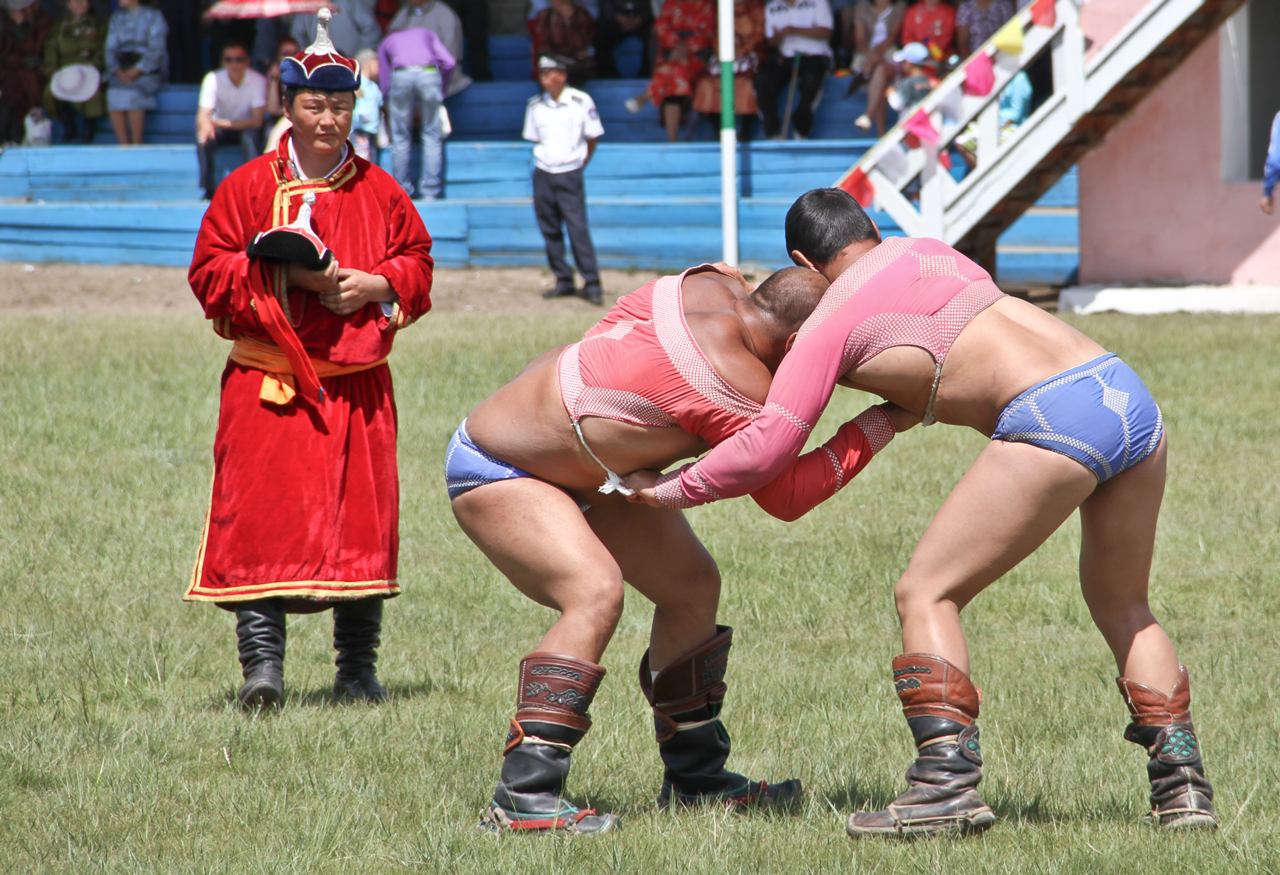
National wrestling Khuresh
Khuresh is the most favorite sport of the Tuvans. About wrestling are composed songs and legends, even in the Tuvinian folklore many themes are devoted to wrestling "khuresh"
| Подробнее +